
9. Simulation
Now that we have seen all the main concepts of Scrum, it is time to put them into practice with a full simulation. I would like you to plan a complete Sprint for a project of your choice, applying everything you have learned so far.
Instead of investing time in learning a specific piece of software, work with pen and paper (or an equivalent digital medium).
Choose a real or fictional project (it can be a website, mobile app, etc.) and follow the steps below to plan a complete Sprint:
- Write down, on 10 sheets of paper, 6 different tasks you would like to complete in the project. This will be your Product Backlog. If you need to, search the internet for a template on how a task is structured.
- Prioritize those tasks, ordering them from most to least important, or the order in which they should be completed.
- Plan a 2-week Sprint; you cannot select more than 4 tasks for the Sprint:
- Define the Sprint Goal.
- Select the tasks from the Product Backlog that you believe you can complete during the Sprint and create the Sprint Backlog.
- Establish the Definition of Done for the selected tasks.
- Simulate a Daily Scrum over 10 days (you can write it in a notebook or on a separate sheet). Note down what you would do each day, what you have done, what you plan to do, and whether you have any impediments.
- Simulate the Sprint Review at the end of the Sprint. Describe how you would present the completed work and what feedback you would expect from the Stakeholders.
- Simulate the Sprint Retrospective. Note down at least 3 things that:
- Worked well during the Sprint.
- Did not work so well.
- Improvements you would implement in the next Sprint.
Take your time.
This exercise would be more useful if you do it as a team, so if you find others interested in learning Scrum, I encourage you to do it together.
:quality(85)/https://andros.dev/static/img/components/license/by-nc-nd.png)
This work is under a Attribution-NonCommercial-NoDerivatives 4.0 International license.
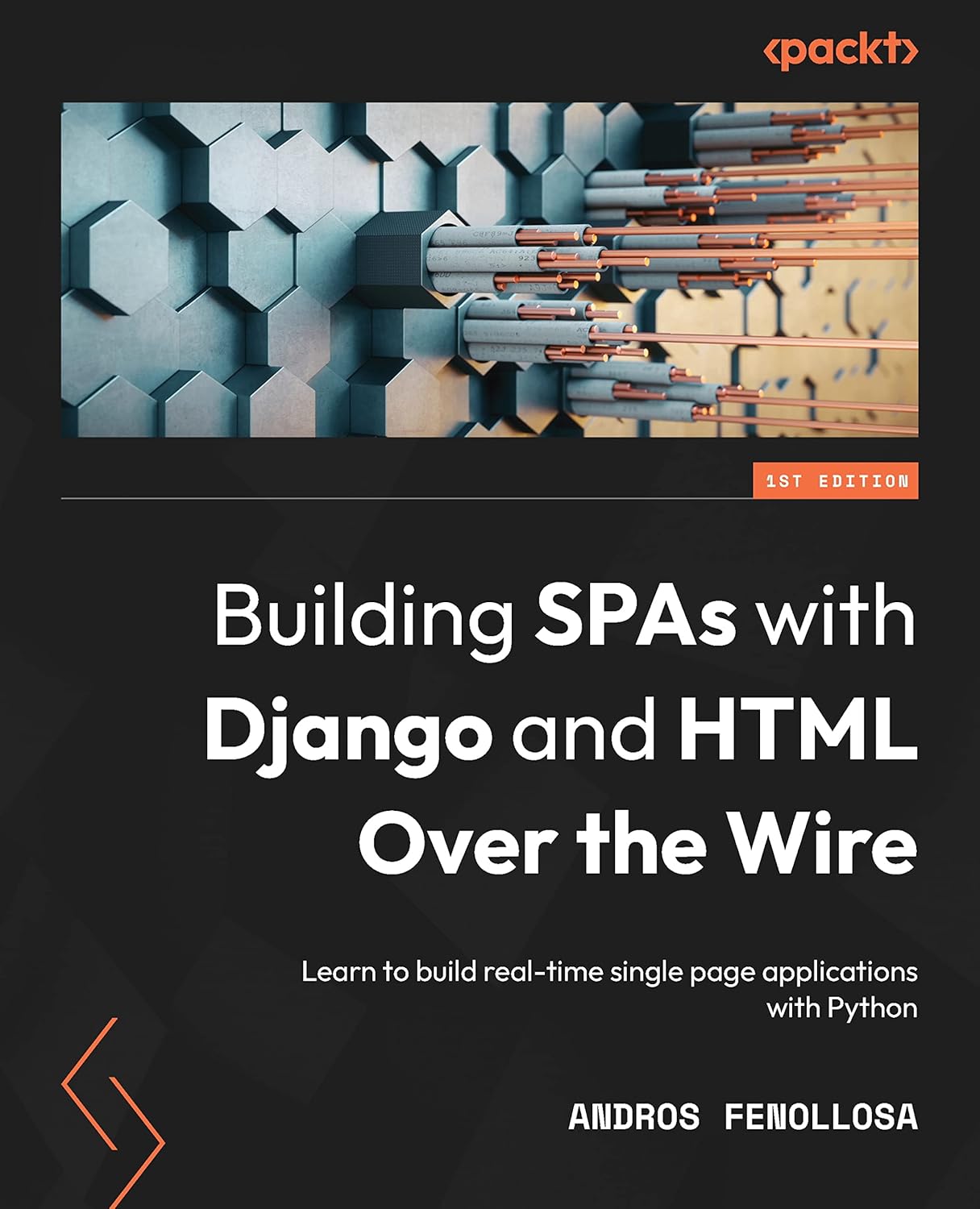
Building SPAs with Django and HTML Over the Wire: Learn to build real-time single page applications with Python
The HTML over WebSockets approach simplifies single-page application (SPA) development and lets you bypass learning a JavaScript rendering framework such as React, Vue, or Angular, moving the logic to Python. This web application development book provides you with all the Django tools you need to simplify your developments with real-time results.
Buy the bookHelp me keep writing
Every coffee gives me a push toward the next article.
 Sure, it's on me!
Comments
There are no comments yet.