
3. Testing
We are going to add pytest as a testing tool so that it uses Django's configuration. To do this, we will create the file pytest.ini in the root of the project with the following content.
[pytest]
DJANGO_SETTINGS_MODULE = proyecto.settings

# Optional, but recommended
python_files = tests.py test_*.py *_tests.py
For this project, we are going to keep all our tests together in a single tests directory divided by applications.
Create a new directory called tests and inside it another directory called libros. Finally, inside libros create a file called test_ejemplo.py.
tests
    └── libros
            └── test_ejemplo.py
By default, pytest will find test files that start or end with the word test. For example, test_*.py or *test.py. Test functions must start with test, and if you want to use classes they must start with Test.
Add the following content.
# tests/libros/test_ejemplo.py

# Functions must start with "test_"
def test_titulo():
    assert "a song of ice and fire" != "game of thrones"
To run all the tests, just run.
pytestIt will let you know that the test passed without any problems.
=================================================== test session starts ===================================================
platform linux -- Python 3.9.2, pytest-6.2.4, py-1.10.0, pluggy-0.13.1
django: settings: proyecto.settings (from ini)
plugins: django-4.4.0
collected 1 item

tests/libros/test_ejemplo.py .                                                                                      [100%]

==================================================== 1 passed in 0.04s ====================================================:quality(85)/https://andros.dev/static/img/components/license/by-nc-nd.png)
This work is under a Attribution-NonCommercial-NoDerivatives 4.0 International license.
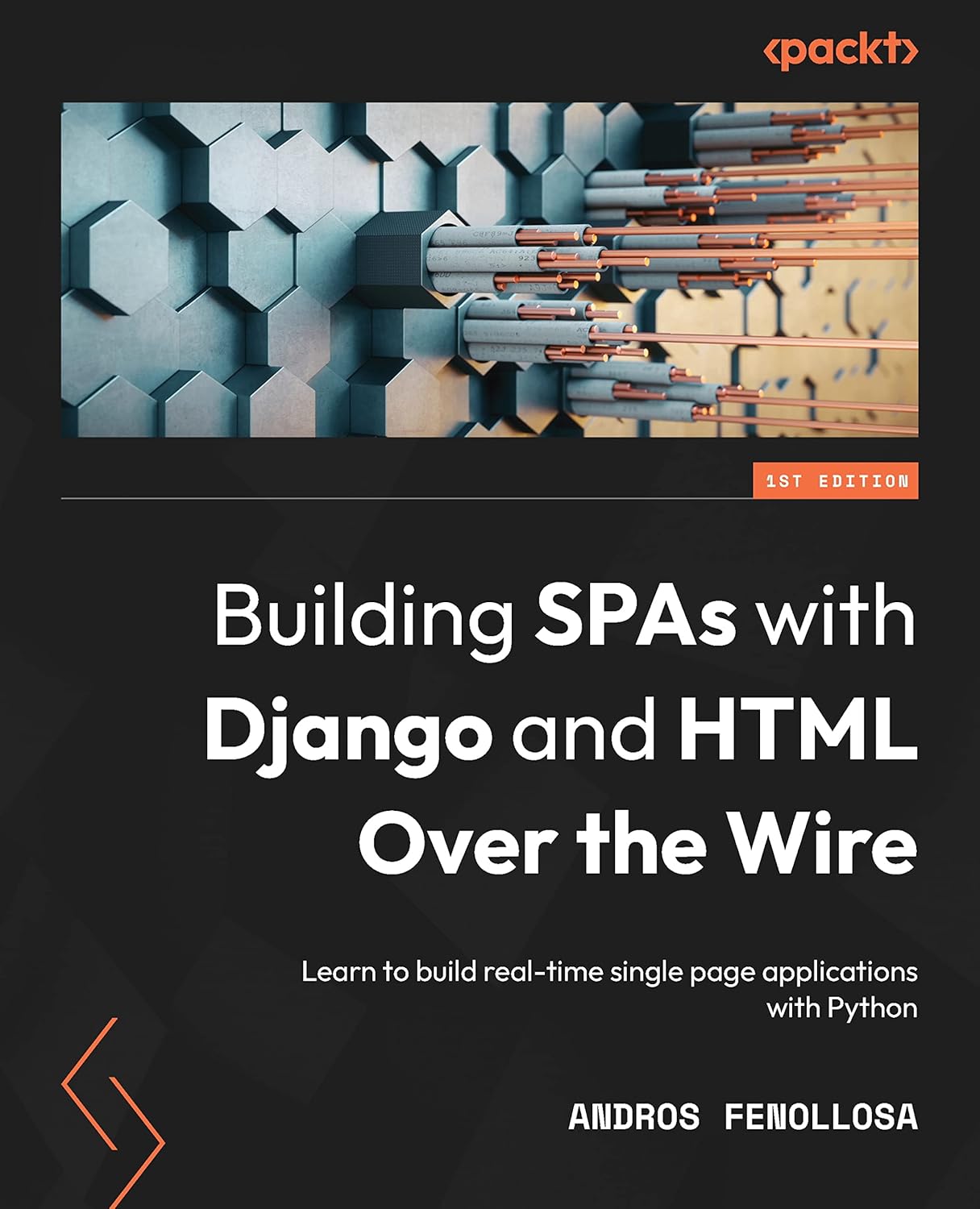
Building SPAs with Django and HTML Over the Wire: Learn to build real-time single page applications with Python
The HTML over WebSockets approach simplifies single-page application (SPA) development and lets you bypass learning a JavaScript rendering framework such as React, Vue, or Angular, moving the logic to Python. This web application development book provides you with all the Django tools you need to simplify your developments with real-time results.
Buy the bookHelp me keep writing
Every coffee gives me a push toward the next article.
 Sure, it's on me!
Comments
There are no comments yet.