
8. Final
Now you can create and manage dynamic apps/sites developed with Python, using Django for the backend.
It would be interesting for you to keep expanding the blog you have created. Here are some ideas:
- Use a template system to avoid repeating HTML code.
- Add a likes system.
- Add a comment system.
- Add a search engine.
- Build a real-time chat.
What's next?
Now that you have learned the basics of Django, you can explore more advanced topics.
I recommend checking out my other courses:
- Django REST Framework: A powerful and flexible toolkit for building Web APIs.
- SQL: A programming language specialized in managing relational databases.
- Testing: Unit and integration tests to ensure code quality.
:quality(85)/https://andros.dev/static/img/components/license/by-nc-nd.png)
This work is under a Attribution-NonCommercial-NoDerivatives 4.0 International license.
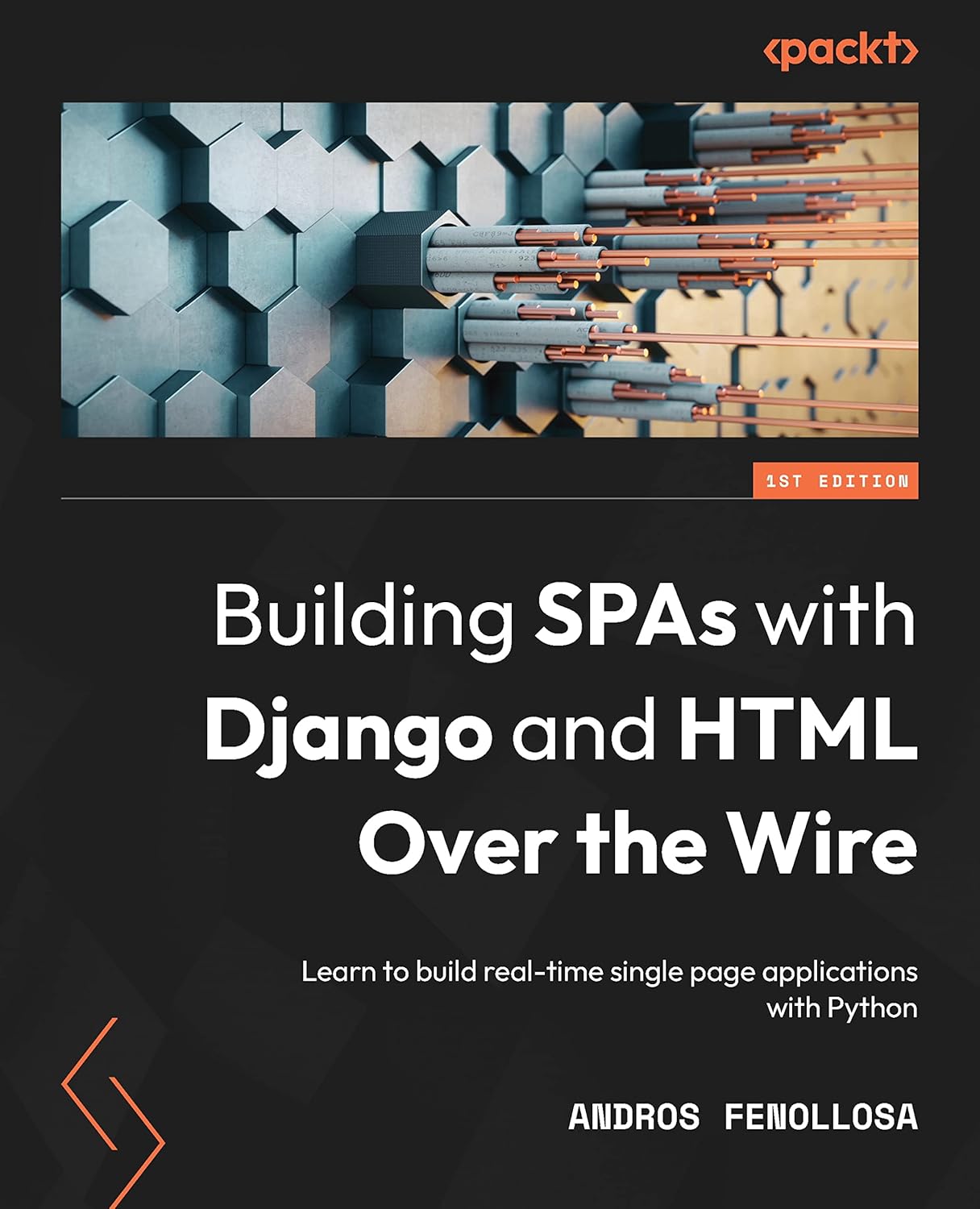
Building SPAs with Django and HTML Over the Wire: Learn to build real-time single page applications with Python
The HTML over WebSockets approach simplifies single-page application (SPA) development and lets you bypass learning a JavaScript rendering framework such as React, Vue, or Angular, moving the logic to Python. This web application development book provides you with all the Django tools you need to simplify your developments with real-time results.
Buy the bookHelp me keep writing
Every coffee gives me a push toward the next article.
 Sure, it's on me!
Comments
There are no comments yet.